15 Winter Indoor Herb Garden Ideas for a Witchy Kitchen Window
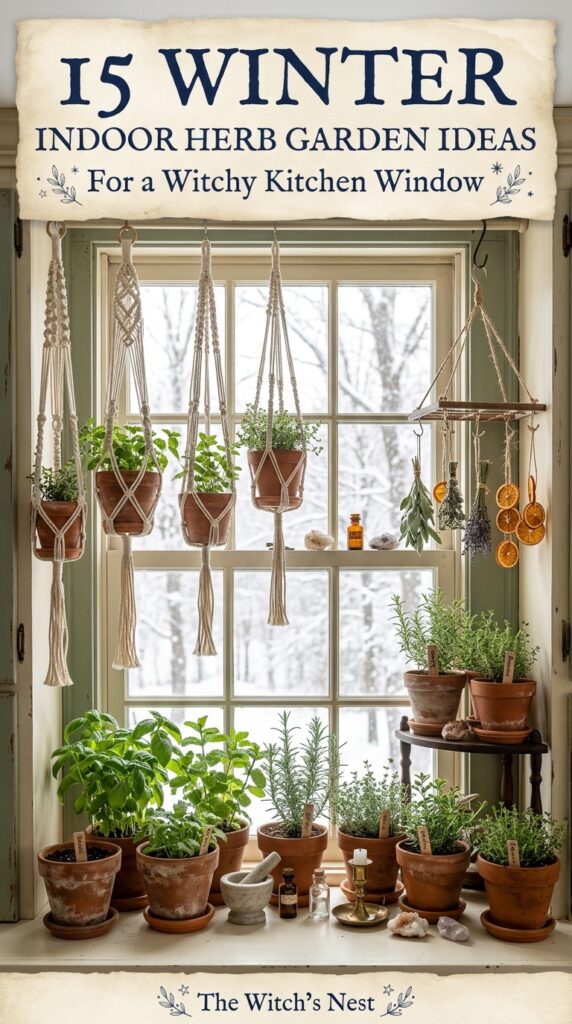
A kitchen window full of green herbs is one of the best remedies for gray winter days. Fresh basil, mint and thyme lift soup, tea and baking, and tending them gives you a small daily ritual that connects you to the garden even when it is asleep. A witchy herb window is also beautiful in its own right. These fifteen ideas cover containers, plants, light and care, and all of them fit a small kitchen with limited space.
1. Terracotta pots on the sill
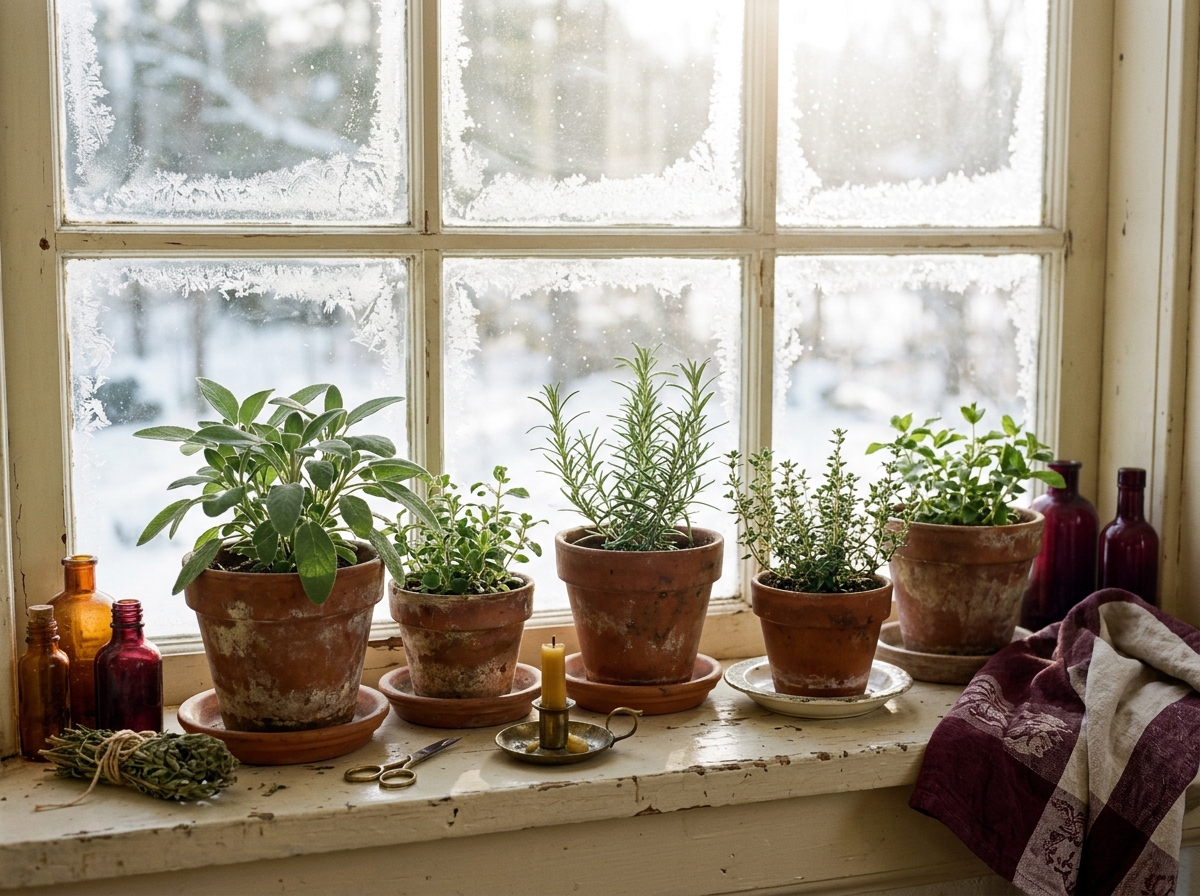
Line up classic terracotta pots with a saucer under each one. The clay breathes, which helps prevent soggy roots, and the warm orange color looks lovely against green leaves and a frosty window.
2. Mason jar herb garden
Plant small herbs in clean glass jars with a layer of pebbles at the bottom for drainage. They look charming in a row and make useful, thoughtful gifts when they are labeled.
3. Hanging macrame planters
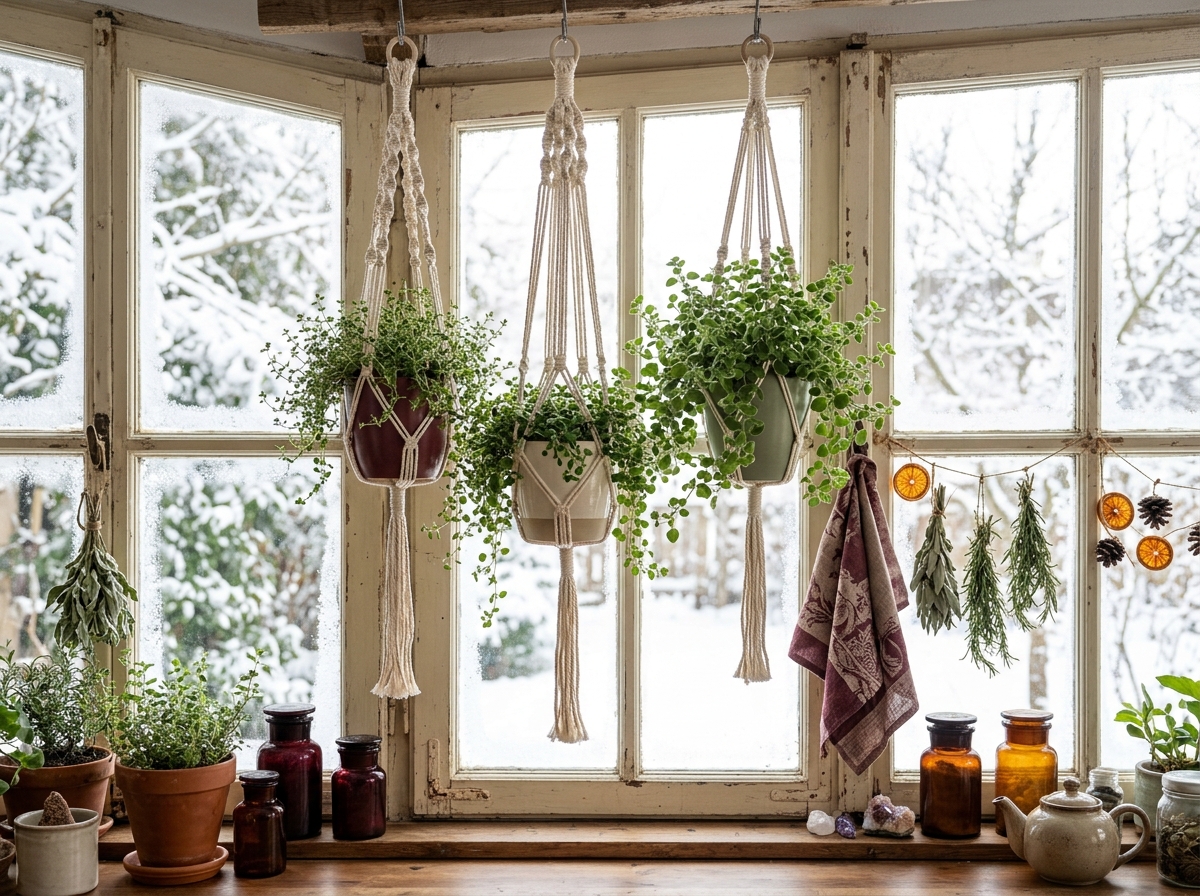
Suspend herbs in macrame holders from a curtain rod or ceiling hook. This frees up counter space and gives trailing plants like thyme and oregano room to cascade down.
4. Tiered plant stand
Use a small wooden or iron stand to stack three or four herb pots in front of the window. It maximizes light and space and makes a green focal point you can see from across the room.
5. Hand-lettered plant markers
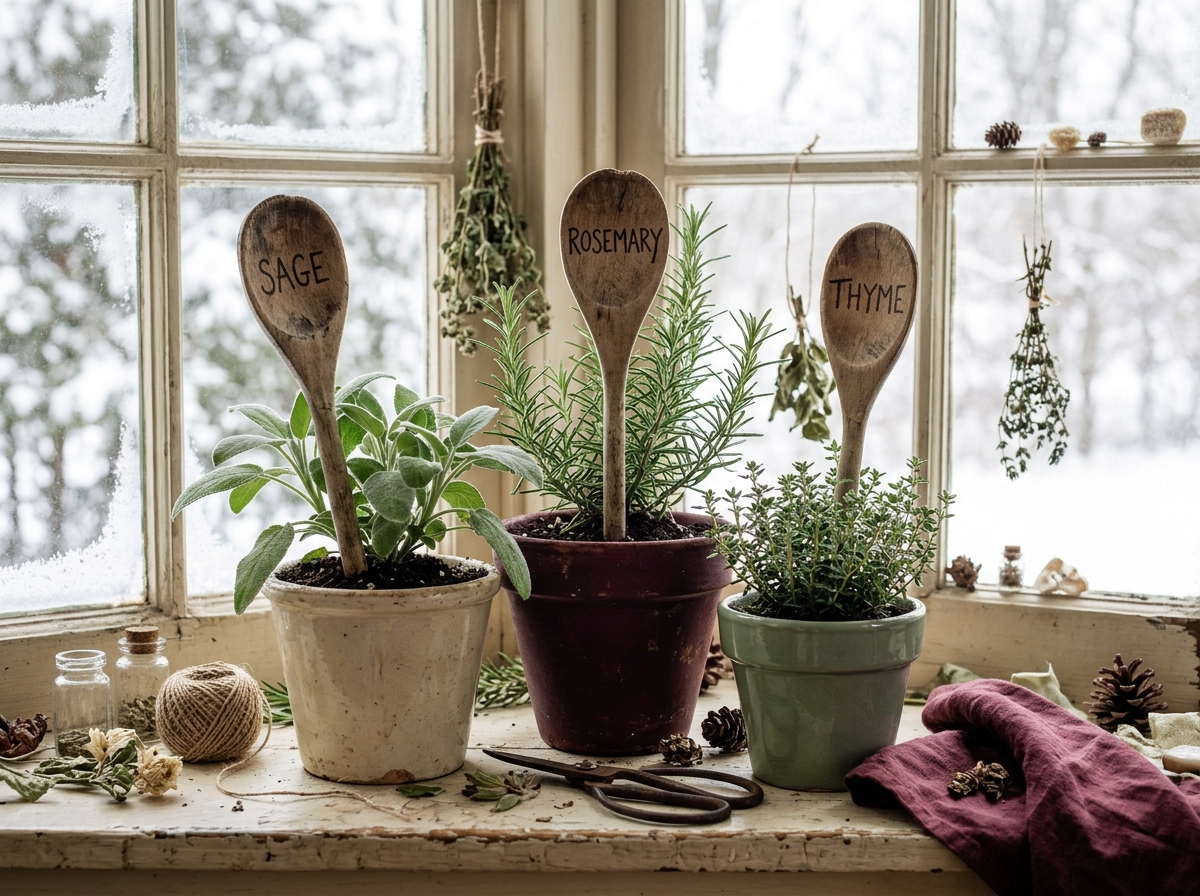
Write each herb's name on a wooden spoon, a flat stone or a ceramic tag and tuck it into the soil. Markers keep the garden organized and add a cottage kitchen touch.
6. Grow light for dark weeks
Add a small LED grow light on a timer if your window gets only a few hours of winter sun. Place it a few inches above the plants and run it about twelve hours a day.
7. Basil on the brightest ledge
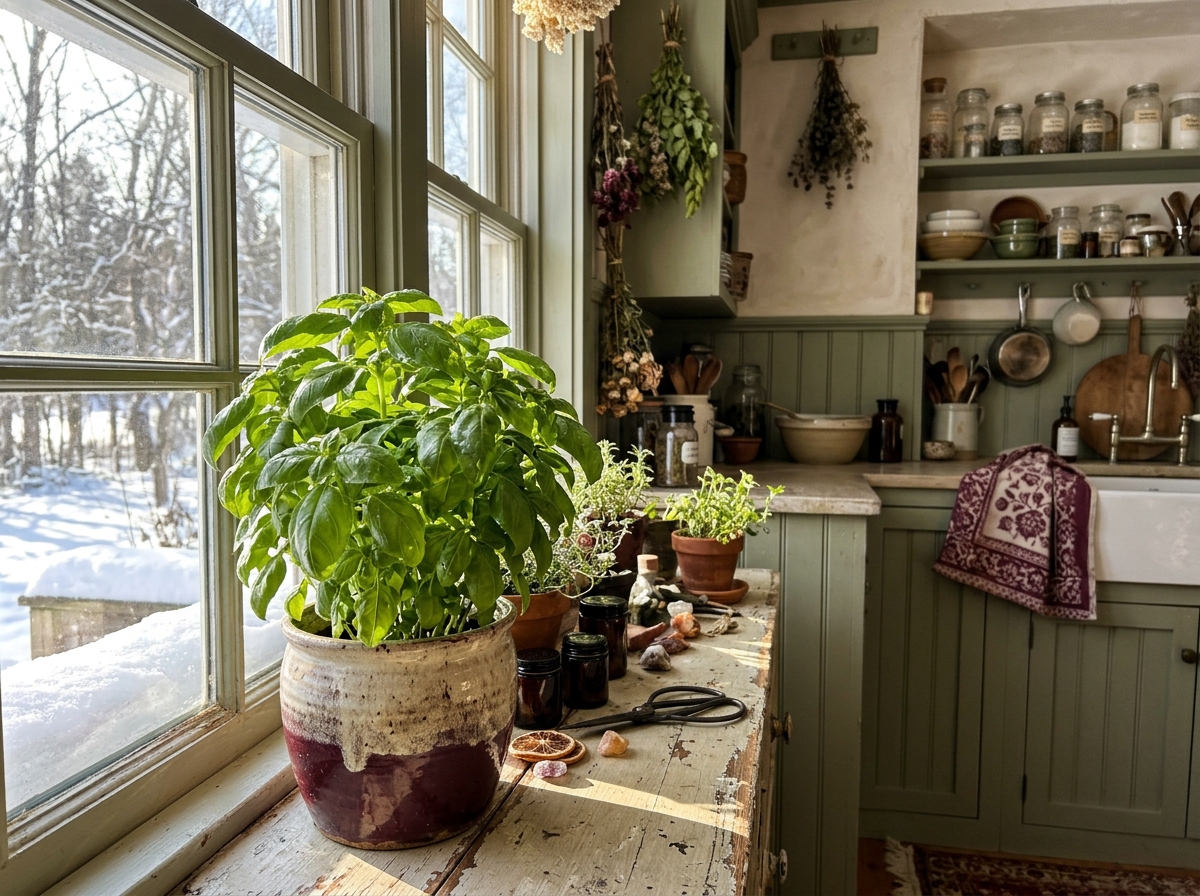
Basil needs the most light and warmth, so give it your sunniest spot away from cold glass. Pinch off the top leaves regularly to encourage bushy growth, and use them fresh in sauces.
8. Mint in its own container
Grow mint alone, because its roots spread quickly and crowd out neighbors. A pot of mint gives you fresh tea leaves all winter, and brushing the foliage releases a bright, cooling scent.
9. Rosemary and thyme pairing
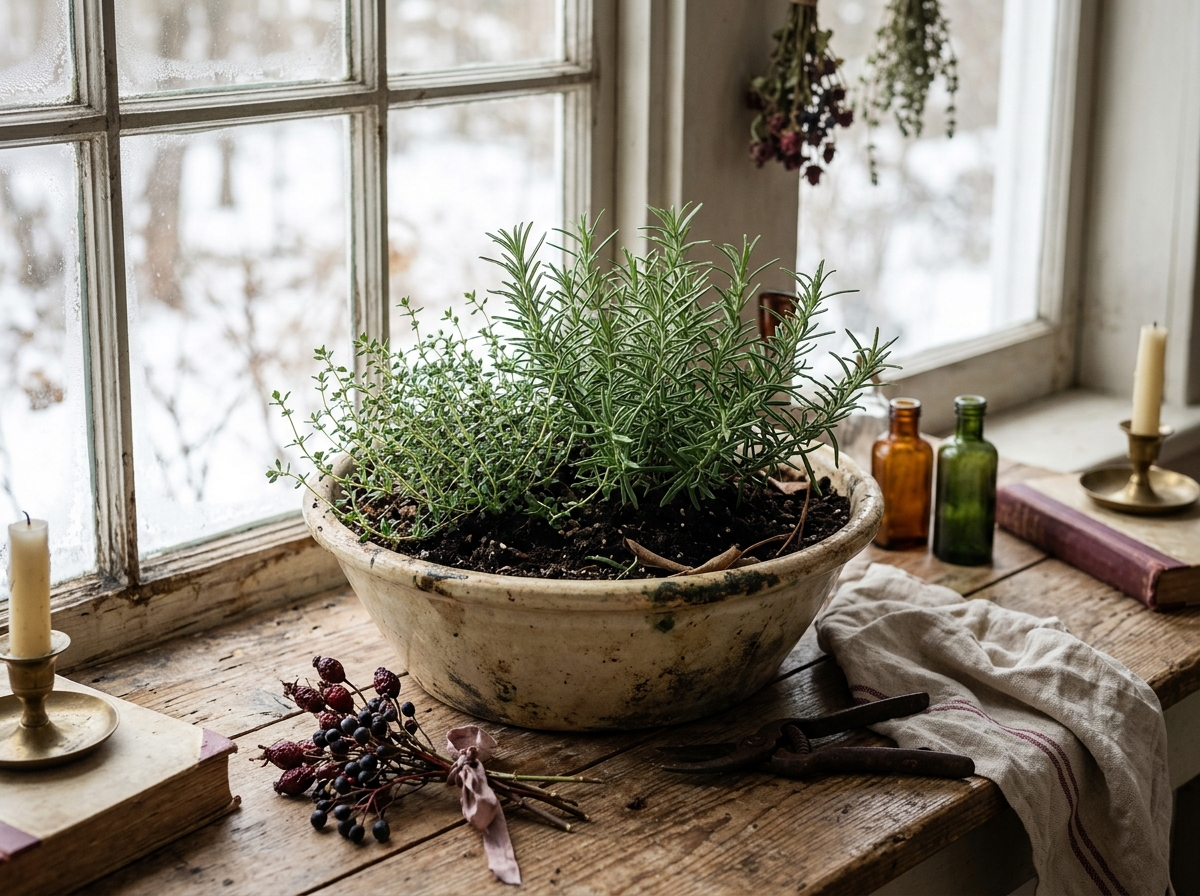
Plant these woody Mediterranean herbs together in a wide shallow pot. Both like bright light and dry soil between waterings, so let the top inch dry out before you give them a drink.
10. Chives from a kitchen scrap
Place a clump of chives in a small pot and snip the green tips with scissors. They regrow quickly, add a mild onion flavor to eggs and potatoes, and are remarkably forgiving for beginners.
11. Parsley in a deep pot
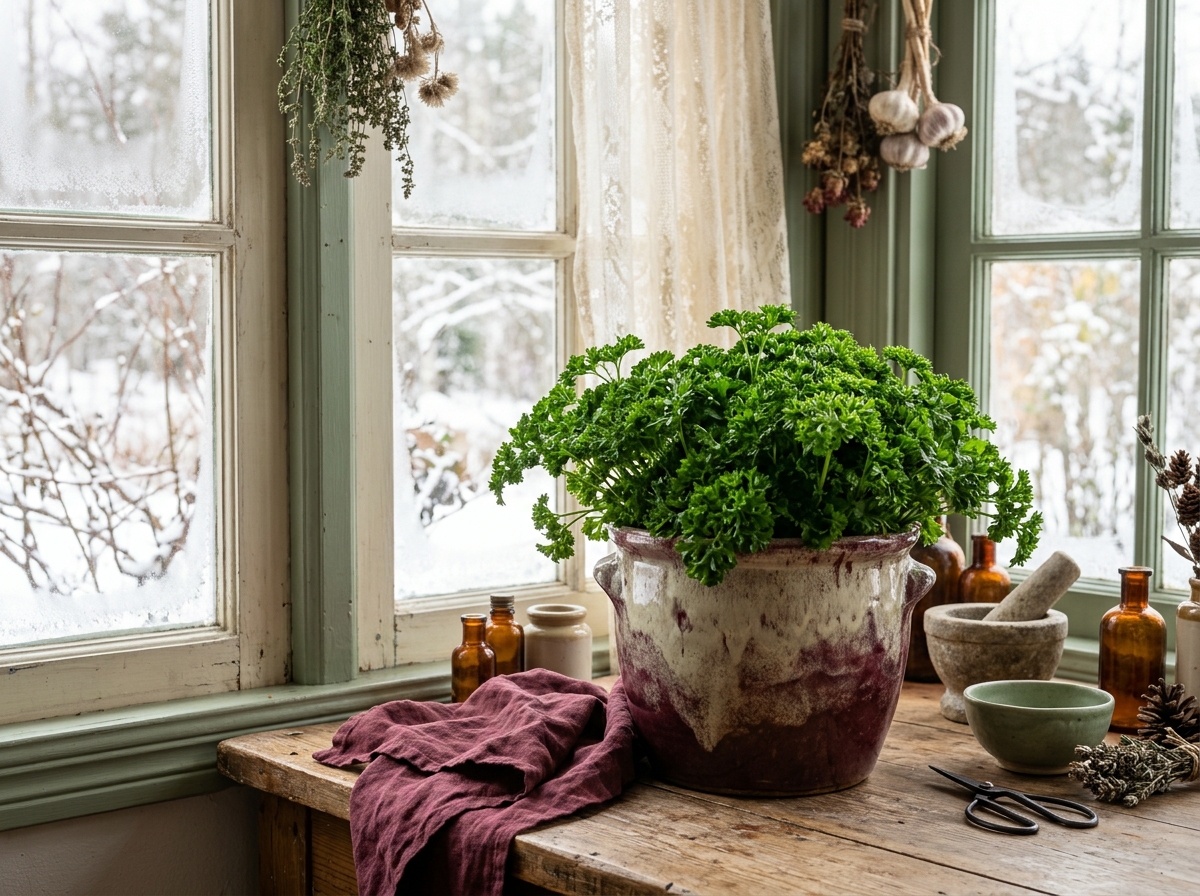
Choose a pot at least eight inches deep, since parsley develops a long taproot. Keep the soil lightly moist and harvest outer stems first so the plant keeps producing through the season.
12. Windowsill tea garden
Combine chamomile, lemon balm and mint in a long trough and label it as your tea blend. Snip a few leaves each evening for a calming cup, and watch the planter fill out.
13. Sage in a ceramic pot
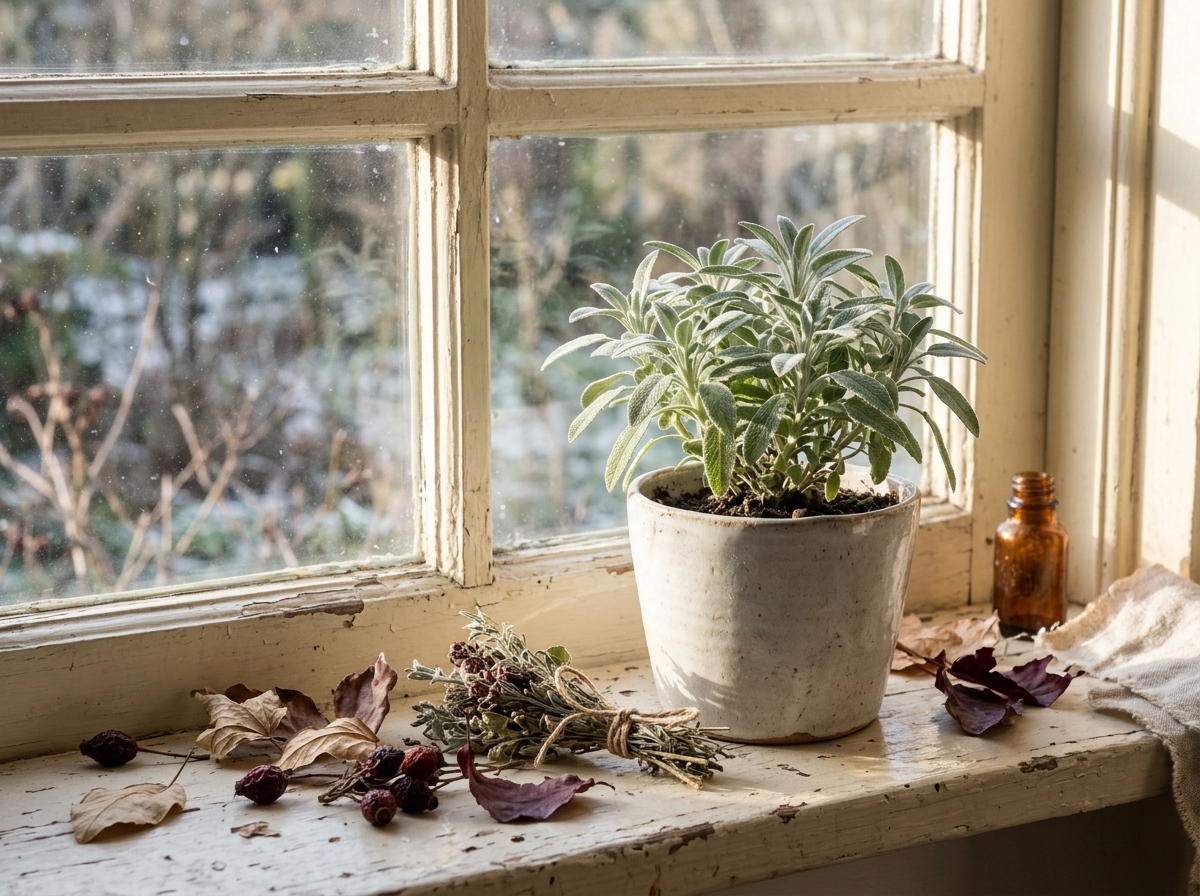
A pot of sage on the sill adds silvery foliage and a warm, savory scent. Dry a few leaves on a rack for cooking, and avoid overwatering because sage hates wet feet.
14. Bay laurel in a corner
Keep a small bay tree in a bright spot near the kitchen. The glossy leaves are perfect for stews and soups, and the shrub grows slowly into a tidy, elegant statement plant.
15. Herb drying rack by the window
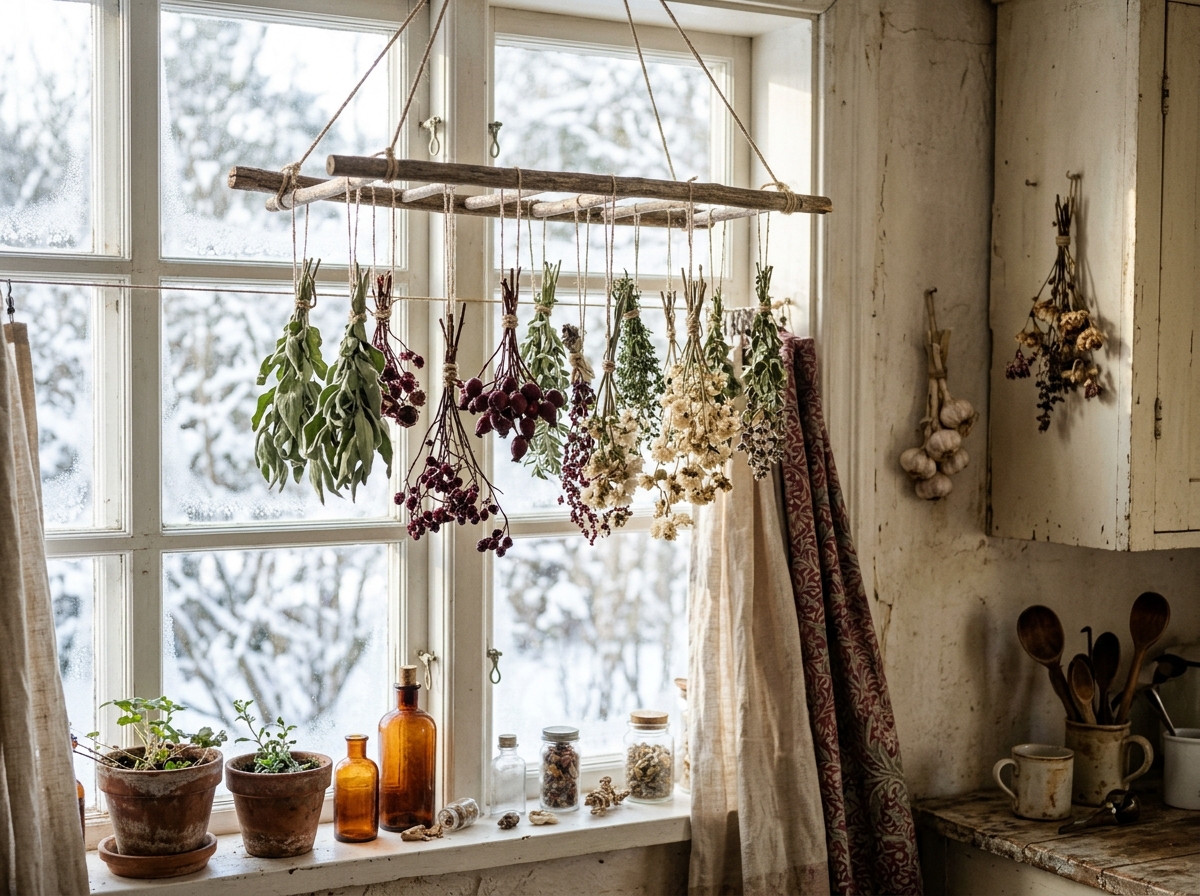
Hang a small wooden rack or a length of twine near the plants and dry surplus stems upside down. It saves harvest for spring and gives the kitchen a warm, old-fashioned look.
Light, Water and Temperature
Most herbs need at least six hours of bright light, so choose the sunniest window and rotate the pots every week. Water only when the top inch of soil feels dry, and make sure each pot has drainage holes. Keep leaves away from cold glass on frosty nights, and avoid placing herbs above radiators, which dry them out. Use a light potting mix with a handful of perlite, and feed lightly once a month with a gentle organic fertilizer. Harvest often, because regular snipping encourages fresh growth.
Pet Safety and Kitchen Rituals
Some herbs and houseplants can upset pets, so check which are safe before placing them on a low sill. Keep essential oils and drying bundles out of reach too. Turn the garden into a gentle ritual by greeting your plants each morning, brushing a hand over the leaves and picking one to use in the day's meal. Label jars and keep scissors nearby, so snipping becomes a simple habit. Even five minutes of care each day makes the kitchen feel alive and grounded.
Final Thoughts
A small window of living herbs brings color, fragrance and flavor to the quietest season. Choose a few plants, give them light, and let your kitchen feel like a little garden.

Deja una respuesta